
Jiahao News
LVT Extrusion Line Planning: Coordinate Layers, Forming and Cooling
Plan an LVT extrusion line around the flooring layer structure, lamination route, cooling arrangement and downstream needs, with configuration confirmed by trial.
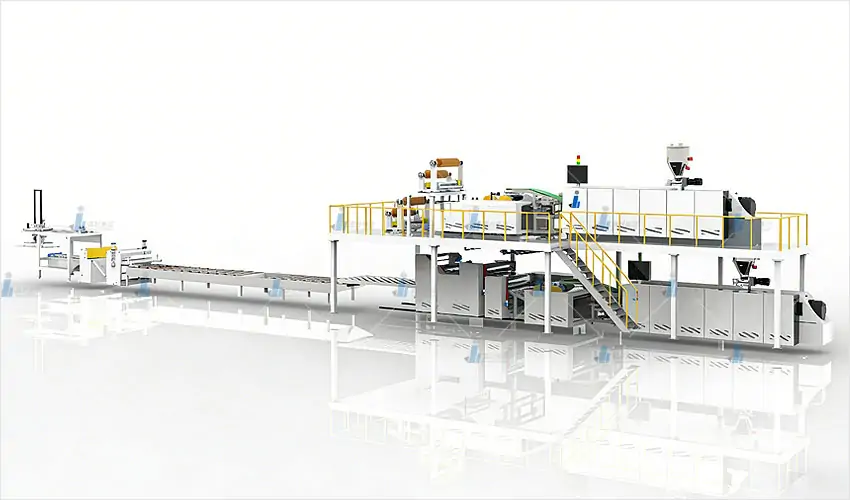
An LVT extrusion project should begin with the floor’s layer structure and the role of each production stage. Decide what the line must form, which layers it must laminate and what happens after the sheet leaves the cooling and cutting section. This gives suppliers a clear basis for proposing equipment and avoids treating one illustrated arrangement as the only possible LVT manufacturing route.
Define the layers before specifying rolls
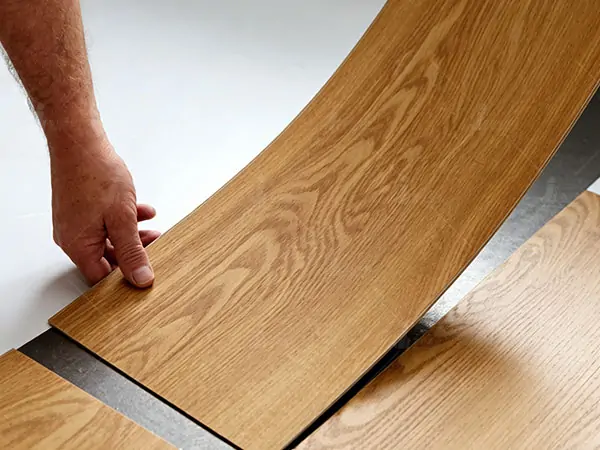
Provide a cross-section drawing showing the substrate, decorative layer, wear layer and any balance layer or other specified component. Identify the material and intended function of each layer. Do not assume a fiberglass layer is included or that it provides an acoustic result without evidence for the actual construction. Confirm the finished floor format as well: a cut sheet, glue-down plank and click-floor project may have different downstream requirements.
Examine forming and lamination together
Discuss how the extruder and die supply the intended sheet and where the layers meet it. Ask how the proposed forming arrangement controls thickness and supports consistent contact between layers. The number of rolls is a configuration detail rather than proof of better output or bonding. Request a process drawing for the specific proposal and distinguish optional features from the core supply. Jiahao’s LVT flooring page can support that scope discussion.
Give cooling and handling their own review
Ask how sheet temperature, movement and receiving are managed after forming. Include drying where the selected route needs it, and establish when samples will be inspected for dimensions and flatness. Cooling capacity and sheet handling should be discussed with the proposed operating conditions. A convincing laminated sample does not show whether a full production run will remain manageable through cutting, stacking and later finishing.
Agree evidence for the target construction
Use the intended material combination and floor dimensions in the trial brief. Inspect layer bonding, surface appearance, thickness consistency and the product characteristics relevant to later processing. If register embossing is required, include its confirmation and sample review explicitly. Record how finishing equipment outside the extrusion supply will receive the sheet. Send Jiahao the floor sample and layer drawing so that the recommendation addresses your construction instead of relying on broad claims about a new generation of intelligent machinery.
Related technical reading
For an equipment review, send your product specification and production requirements to Jiahao.