
LVT Flooring Production Line
Jiahao Machinery manufactures LVT production lines for 1–3 mm PVC-based resilient vinyl flooring sheet and click-floor substrates. Configure extrusion, five-roll calendering, lamination, cooling and cutting around your floor structure, output target and workshop requirements.
Product introduction
LVT flooring production: products and line scope
Jiahao LVT floor extrusion line is configured for PVC-based resilient flooring sheet production, including single-layer sheet, multi-layer vinyl flooring substrate and projects that require wear layer or decorative film lamination during the forming process.
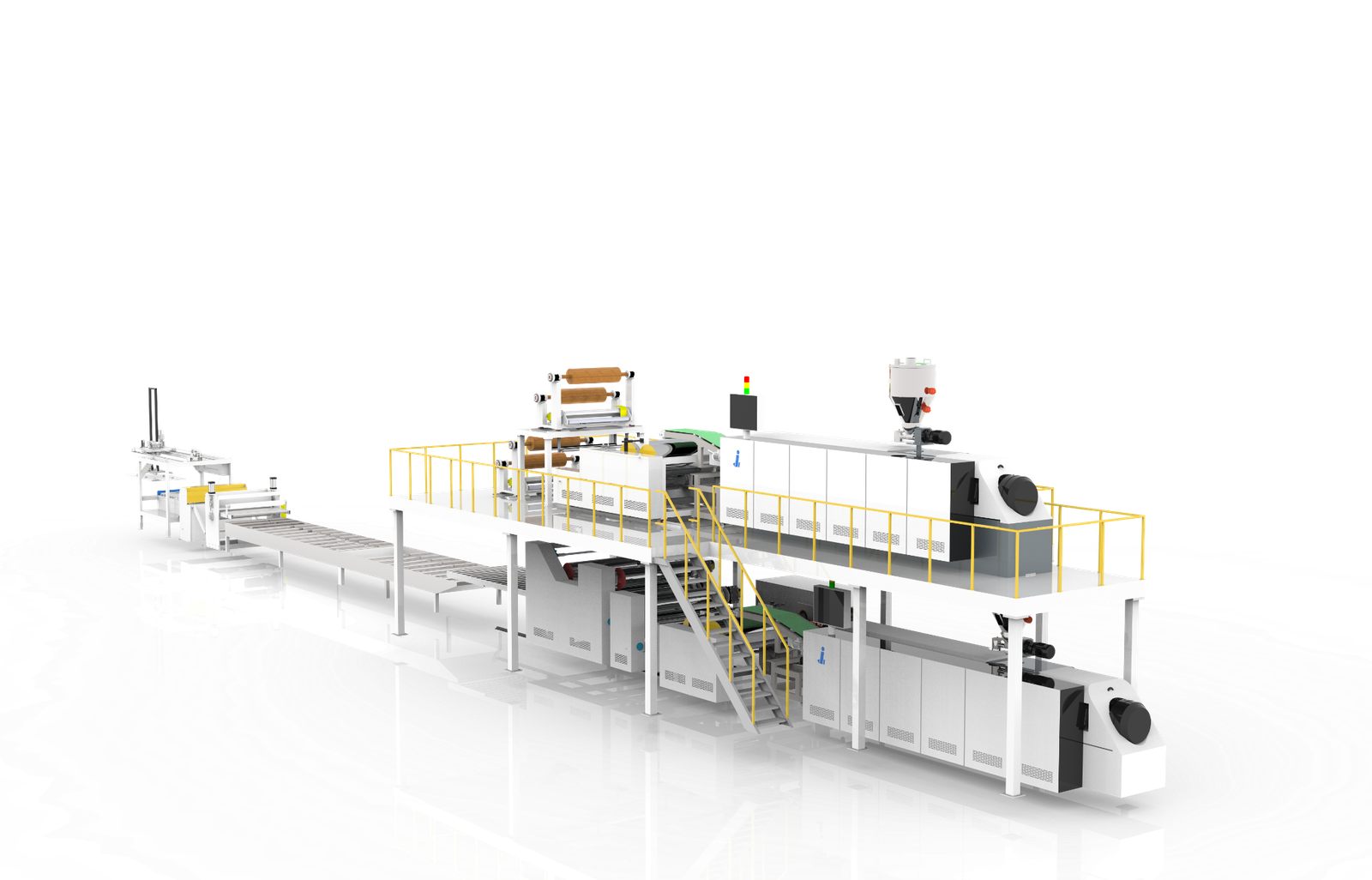
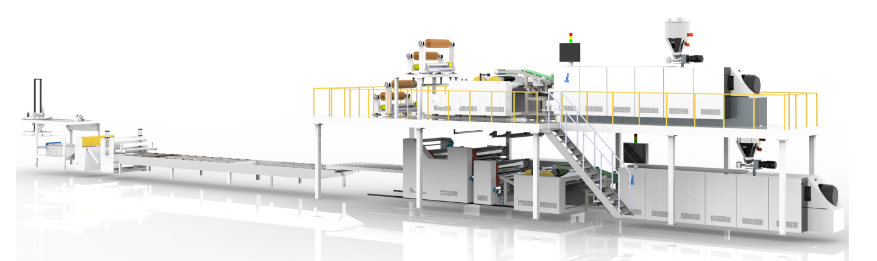
The line can be planned around a 92/188, JHZ110/220, JHZ115/230, JHZ125/235 or JHZ132 extrusion host according to the target capacity. Main sections include extrusion, T-die forming, balance layer lamination, film lamination platform, five-roller calendering, oil temperature control, cooling tank, chiller, wind blowing equipment, hauling, cutting and hydraulic lifting platform.
For overseas buyers, Jiahao focuses the proposal around floor width, thickness, layer structure, formula, surface requirement, capacity target, voltage and workshop layout instead of offering a generic machine list.
Production process
LVT manufacturing process: extrusion to sheet cutting
The process route follows the downstream layout reference from extrusion and forming to balance layer lamination, cooling, drying, hauling and cutting.
Extruder
The extrusion host plasticizes and delivers PVC-based flooring compound according to the selected model and target hourly output.
T-die forming
The T-die shapes the sheet with 1050 mm or 1350 mm die-width direction, depending on the required product plan.
Balance layer lamination
The balance layer is laminated on the LVT bottom layer to help reduce floor warping.
Film lamination and five-roll calender
The lamination platform and five-roller calender control sheet thickness, film bonding and surface quality. The line also supports integrating fiberglass fabric into the LVT flooring structure to improve dimensional stability and reduce the risk of long-term deformation.
Cooling tank and chiller
Cooling tank, chiller and oil temperature controller support stable temperature control after forming.
Wind blowing and hauling
Wind blowing equipment dries the sheet surface before the hauling machine pulls the product toward cutting.
Cutter and hydraulic platform
The cutter and hydraulic lifting platform handle final sheet cutting and downstream receiving.
Technical parameters
LVT line configuration reference
Use these figures as configuration references. Confirm the output for your floor structure, formula, width, thickness and production conditions before selecting a model.
Swipe horizontally to view the full table.
| Finished product | LVT flooring sheet, vinyl click flooring substrate and resilient vinyl flooring board |
|---|---|
| Main materials | PVC-based flooring compound, stabilizer, lubricant, additives, optional wear layer and decorative film |
| Main machine reference | 92/188, JHZ110/220, JHZ115/230, JHZ125/235 and JHZ132 |
| Product thickness | 1-3 mm |
| T-die width | 1050 mm / 1350 mm |
| Reference capacity | 625–2,600 kg/h across the listed models; see the model comparison below |
| Linear speed | 6-10 m/min |
| Fiberglass reinforcement | Fiberglass fabric laminated within the LVT flooring structure to improve dimensional stability and help reduce long-term deformation and warping |
| Forming system | T-die, balance layer lamination, film lamination platform and five-roller calender |
| Cooling and downstream | Oil temperature controller, cooling tank, chiller, wind blowing equipment, hauling machine, cutter and hydraulic lifting platform |
| Optional system | Online EIR synchronization system for high-end EIR LVT floor products |
| Component options | ABB frequency converter, Siemens motor, Siemens PLC, Schneider Electric components and servo cutter |
| Certification direction | For LVT projects targeting European TUV certification requirements; final certification depends on product formula, testing and buyer project scope |
| Buyer should confirm | Product thickness, T-die width, target capacity, line speed, balance layer requirement, EIR requirement, voltage and workshop layout |
Compare five LVT extrusion line models
Swipe horizontally to view the full table.
| Model | Thickness | T-die width | Extruder motor | Reference capacity (kg/h) | Calender rollers |
|---|---|---|---|---|---|
| 92/188 | 1-3 mm | 1050 / 1350 mm | 110 kW | 625 | 5 |
| JHZ110/220 | 1-3 mm | 1050 / 1350 mm | 200 kW | 1,000–1,300 | 5 |
| JHZ115/230 | Confirm for project | Confirm for project | Confirm for project | 1,400–1,700 | 5 |
| JHZ125/235 | Confirm for project | Confirm for project | Confirm for project | 1,900–2,100 | 5 |
| JHZ132 | Confirm for project | Confirm for project | Confirm for project | 2,300–2,600 | 5 |
Capacity figures are production references, not guaranteed output. The 92/188 figure converts the existing 15 tons/24h reference to 625 kg/h over 24 hours. Actual output depends on formulation, layer structure, sheet dimensions, process settings and operating conditions. For the added models, confirm product thickness, T-die width and extruder motor specification for each project.
Equipment list
Core equipment scope for LVT flooring projects
Plan the equipment scope around your flooring structure and existing factory equipment. Confirm material preparation and feeding, balance layer lamination, cooling, cutting and receiving in the quotation; online EIR is optional. For click-floor projects, specify the substrate and any further finishing requirements so the supply boundary is clear.
Customer story
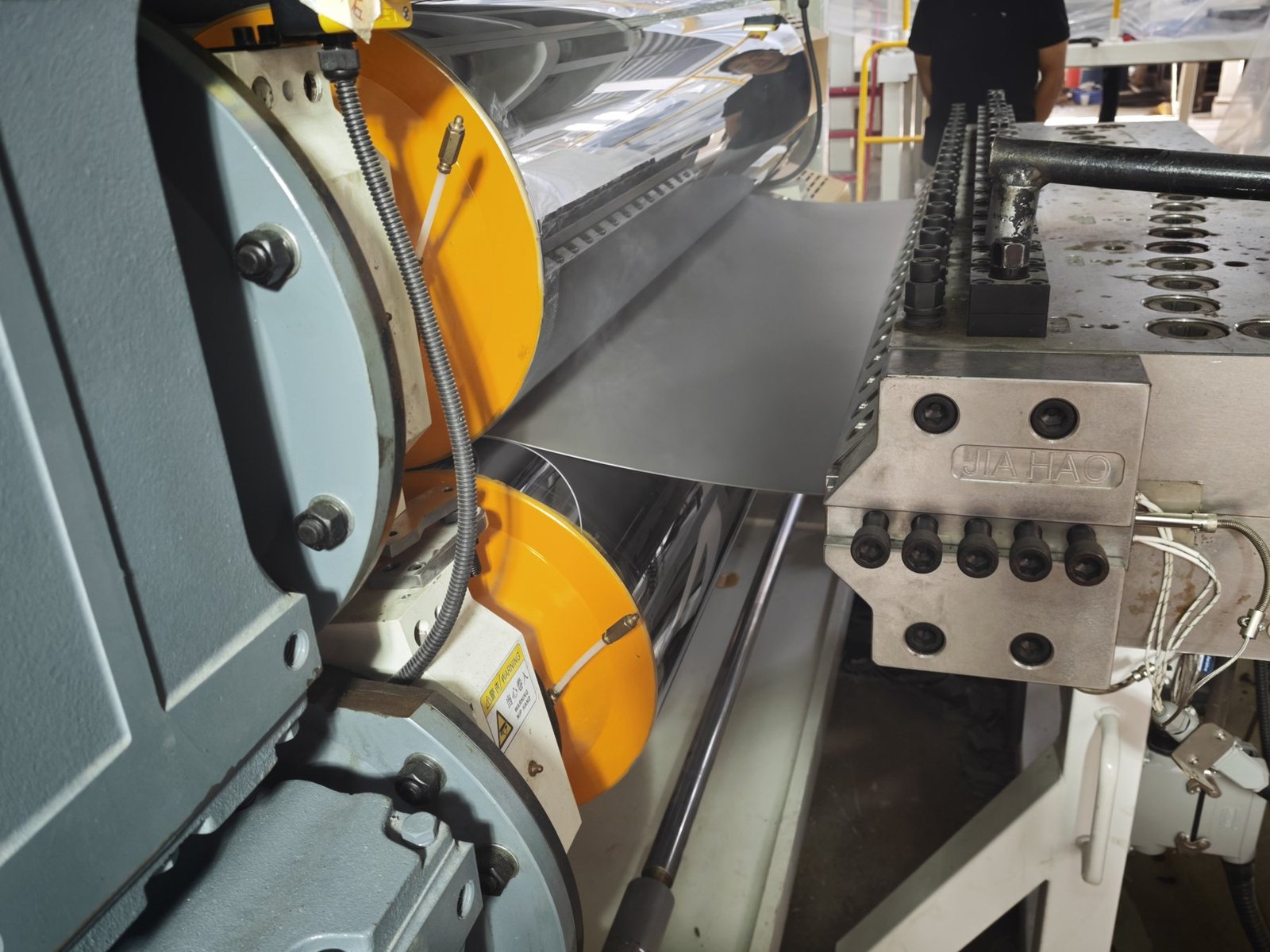
LVT flooring line trial for a Turkish customer
See an LVT flooring production line during a factory trial at Jiahao Machinery, with video and photos from the test.
Flooring applications
LVT flooring products this line can support
Compare balance-layer sheet production and optional online EIR surface requirements against your target flooring sample.
Balance-layer LVT flooring sheet
For 1-3 mm resilient vinyl flooring projects that need bottom balance layer lamination to reduce floor warping.
- Thickness reference: 1-3 mm
- T-die width: 1050 / 1350 mm
- Balance layer lamination support
Online EIR surface LVT flooring
Optional online EIR synchronization can be discussed for decorative LVT flooring with aligned surface texture.
- Line speed reference: 6-10 m/min
- Five-roller calender forming
- Finished product inspection ready
Why Jiahao
High-capacity LVT production with controlled lamination
The line is planned around target hourly output, 1-3 mm product thickness, balance layer lamination, EIR surface options and reliable international components.
Fiberglass reinforcement for improved dimensional stability
Our LVT production line integrates fiberglass fabric into the flooring structure to improve dimensional stability. This reinforcement helps significantly reduce the risk of deformation and warping during long-term use, helping the flooring maintain its flatness.
High production capacity
Model capacity references range from 625 to 2,600 kg/h. The existing line speed reference is 6-10 m/min; confirm the operating speed for your selected configuration.
Balance layer lamination
The balance layer lamination section applies the bottom balance layer to help solve LVT floor warping.
Optional online EIR system
An online EIR synchronization system can be configured for high-end EIR LVT floor products.
International component options
ABB frequency converter, Siemens motor, Siemens PLC, Schneider Electric components and servo cutter can be discussed for the project.
TUV-oriented project discussion
The line can support LVT flooring projects targeting European TUV certification requirements, subject to final formula and testing.
Installation support and spare parts
Jiahao can support layout communication, installation guidance, training, technical support and spare parts supply for LVT flooring projects.
Before you request a quotation
LVT production line: configuration questions
Use your flooring specification and factory conditions to define the line. For a step-by-step checklist, read how to choose an LVT flooring production line.
Which LVT extrusion model should I choose?
Model selection
Compare 92/188 at 625 kg/h, JHZ110/220 at 1,000–1,300 kg/h, JHZ115/230 at 1,400–1,700 kg/h, JHZ125/235 at 1,900–2,100 kg/h and JHZ132 at 2,300–2,600 kg/h. Confirm the selected model against your formulation, sheet dimensions, layer structure and required production schedule.
How much power and workshop space are required?
Factory requirements
The listed 110 kW and 200 kW values are extruder motor ratings, not total line power or measured energy consumption. Request the equipment load list, cooling requirements and layout for your configuration. See the factory planning checklist.
What is included in the LVT flooring line?
Supply scope
The core process shown covers extrusion and T-die forming through lamination, five-roll calendering, cooling, hauling and sheet cutting. Online EIR is optional; component brands and servo cutting are project options. Confirm material preparation, feeding, utilities and any downstream finishing equipment separately in the quotation, including interfaces with equipment you already have. The written quotation defines the standard supply for your configuration.
Discuss your LVT production line configuration
Send your flooring sample or layer structure, target width and thickness, daily output, formula, available voltage and workshop layout. Include balance layer and EIR requirements so we can discuss the model and equipment scope.