
Jiahao News
Routine WPC Production Line Maintenance and Material Checks
Review WPC production line maintenance through material records, dust control, safe inspection and approved service plans matched to the installed equipment.
Routine WPC production line maintenance should cover material handling, extrusion and the installed downstream equipment. Wood-plastic composite processing involves both polymer and wood-derived ingredients, so material consistency and housekeeping matter alongside mechanical condition. A useful plan assigns each inspection to the appropriate role and records changes that need investigation.
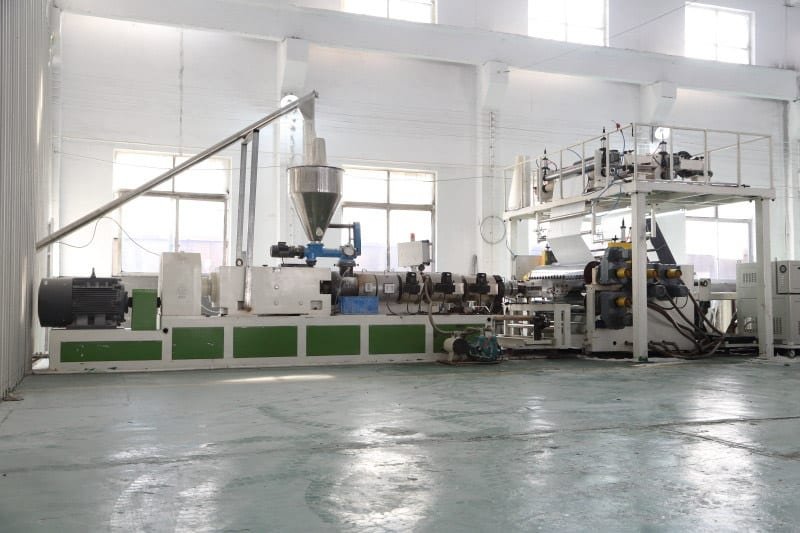
Track material condition and feeding consistency
Keep records of the polymer type, wood-derived ingredient, additives and formulation revision used for each batch. WPC formulations vary, and moisture management must follow the approved material specification rather than a universal drying rule. Unexpected clumping, inconsistent feed or a material change should be recorded before anyone alters the process.
Observe the feeding system only through designated safe inspection points. Compare visible behavior and installed readings with the established baseline. Feed interruptions and unstable extrusion may have material, equipment or control causes; do not assume that changing a screw-speed setting will resolve them.
Manage housekeeping around the installed layout
Wood flour and process residue should be managed through the site’s assessed dust-control and housekeeping system. Keep routes and collection areas clear using the approved method, and avoid spreading accumulated dust through improvised cleaning. The correct approach depends on the material and equipment arrangement.
Hazardous servicing requires authorized isolation and verification under the specific equipment procedure. The OSHA tutorial explains that principle. Cleaning access, approved chemicals and lubricant specifications must come from the manufacturer. Do not remove guards or reach into feeding, pulling or cutting equipment during operation.
Inspect condition through evidence and records
Operators can report abnormal noise, leakage, damaged external hoses, inconsistent product travel and control alarms from safe positions. Qualified maintenance personnel should assess internal wear, sensor calibration and component replacement. The interval for a bearing, gearbox or cooling circuit depends on its manual and operating history.
Relate maintenance observations to product evidence such as surface appearance, thickness, profile dimensions or board flatness. Retain samples from a recurring defect and identify their batch and production time. Similar symptoms may arise from different causes, so a documented comparison is more useful than repeatedly applying the same adjustment.
Prepare a clear shift handover and escalation route
A handover should identify completed routine work, unresolved observations and restrictions on the next production run. Stop and escalate when a safeguard is compromised, a drive develops a sudden disturbance or material handling becomes unsafe. Internal repairs and alignment changes belong in a qualified service plan. Match that plan to the actual WPC product and equipment configuration rather than copying a checklist from another type of flooring line.
Related technical reading
For an equipment review, send your product specification and production requirements to Jiahao.